Rooftop Restaurant Spaces in Pune: What Makes a Location Suitable for Dining Businesses?
A suitable rooftop restaurant space in Pune needs five things: a catchment with dining-out spending, easy night access with dinner-peak parking, a genuine view and ambience, kitchen feasibility (exhaust, utilities, service entry), and clear permissions (fire NOC, FSSAI path, project approval). At Rama Barcode Moshi, rooftop spaces run 1,757–6,000 sq.ft from ~₹4.95 crore — evaluate each unit on this checklist, not on renders.
- Rooftop dining sells experience — arrival, view and ambience are revenue drivers, not décor.
- Kitchen engineering (exhaust, service entry, fire NOC) kills more rooftop deals than price does.
- Dinner-peak parking and lift capacity cap your covers — verify both.
- Visit twice (afternoon + night) before any token money.
A rooftop restaurant is two businesses in one: a real-estate asset that must appreciate and lease, and a hospitality operation that must fill covers nightly. Most buyers evaluate only the first and discover the second after paying. This guide evaluates both — using Rama Barcode's rooftop spaces in Moshi as the worked example — so F&B entrepreneurs and investors can judge a rooftop on the factors that actually decide its P&L.
The Customer Experience Starts Before the Restaurant
Diners form their verdict before the first course: road visibility and signage that say "dining destination," a building entrance that feels premium at night, parking or valet that absorbs the 8–10 pm rush, and a lift ride that builds anticipation rather than testing patience. A well-planned arrival sequence — lit entrance, dedicated restaurant lift, host desk at terrace level — is what converts a tall building into a dining brand. When you evaluate any rooftop, do the full arrival yourself at dinner hour: drive in, park, ride up, and notice every friction point. Each one will cost you covers.
View and Ambience: The Revenue Premium
The rooftop premium exists because of view, openness and evening atmosphere — the exact things that justify higher average bills and event bookings over a ground-floor outlet. Evaluate them honestly: actual view corridors at lunch and dinner (not renders), wind and monsoon exposure and the cost of retractable or weather-proof roofing, neighbouring terrace sightlines for privacy, city-light backdrops for evening appeal, and noise from roads, generators or adjacent commercial activity. A rooftop facing a beautiful sunset with highway noise underneath needs acoustic planning in the budget; a rooftop with a mediocre view but a strong catchment can still win on food and programming. Know which one you are buying.
Area and Layout: Seating Is Only Half the Space
Restaurant planning divides area into revenue space (seating, bar, event deck) and support space (kitchen, service stations, washrooms, storage, staff areas, circulation). A common failure is buying 2,000 sq.ft of "restaurant space" that yields 900 sq.ft of seats after support needs. As a rule, plan roughly 40–50% of total area for support in full-service formats. Rama Barcode's 1,757–6,000 sq.ft rooftop band accommodates compact lounge formats at the lower end and large dine-in plus banquet formats at the upper end — but always test-fit your specific concept (covers, cuisine, kitchen type) on the actual plan with an F&B consultant before committing.
Visibility and Access: Destinations Still Need to Be Found
Even destination dining benefits from being easy to find and reach. Clear road signage, simple navigation ("above the BRTS-road tower, 5 minutes from Bhosari MIDC"), ride-hailing pickup points, and dinner-hour access without security friction all reduce the effort of choosing your outlet over a competitor. Rooftops inside mixed commercial towers gain an extra advantage — office workers above and retail below become weekday lunch and early-evening customers. Check the project's evening access policy explicitly: some towers restrict visitor movement after hours, which directly affects dinner operations.
Operational Planning: The Deal-Killers
More rooftop deals die on operations than on price. Verify each of these with qualified professionals before token money:
- Kitchen exhaust routing: can commercial exhaust duct from your kitchen to above terrace level without crossing other units? Who bears the cost?
- Utilities: PNG/gas-bank space, water load, drainage with grease traps, and three-phase power capacity for kitchen equipment.
- Service movement: dedicated service lift or dumbwaiter, back-of-house corridors, and waste-removal routing that never crosses diners.
- Fire and safety: fire NOC path for assembly occupancy, extinguishers, emergency exits from terrace level, and kitchen suppression systems.
- Permissions: FSSAI licence, Shops & Establishment, health/trade licence, signage, music and (if serving alcohol) excise — plus the project's written restaurant-use approval.
- Weather and sound: monsoon-proofing budget, wind-load for structures, and music timing permissions from authorities and the project.
Cost Reality: Property Plus Build-Out
| Cost Head | What to Budget | Notes |
|---|---|---|
| Property | ~₹4.95 Cr onwards (Rama Barcode) | Plus stamp duty, registration, charges |
| Kitchen | Equipment, exhaust, gas-bank, grease traps | Get vendor quotes pre-token |
| Interiors | Dining, bar, lighting, acoustics, weather-proofing | Rooftop premiums over ground fit-out |
| Licences | FSSAI, fire, health/trade, signage, music | Consultant + timeline buffer |
| Working capital | Staff, launch marketing, initial months | Most under-budgeted line item |
Rama Barcode Opportunity
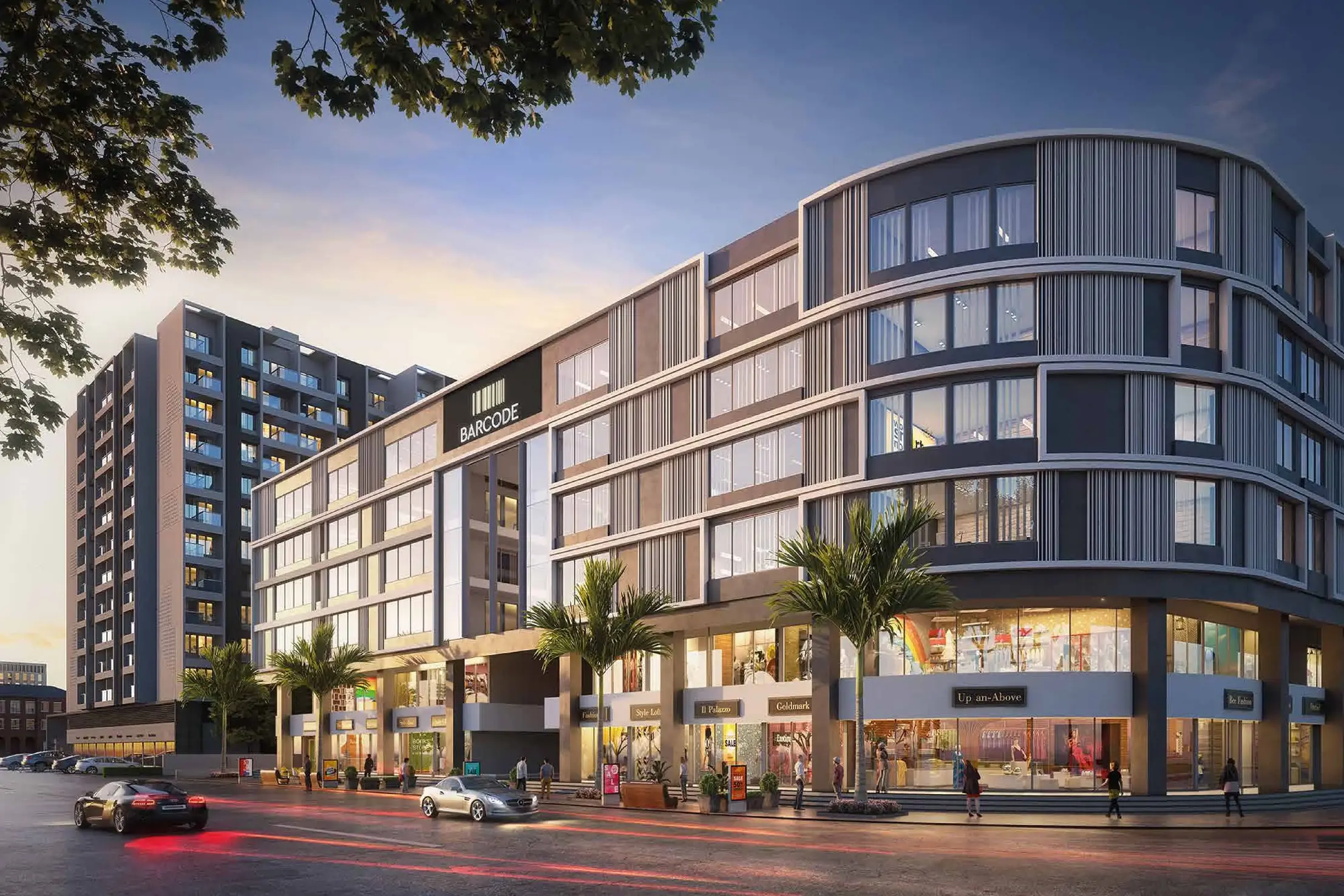
Rama Barcode positions rooftop restaurant spaces (1,757–6,000 sq.ft) inside a 10-floor Moshi tower with 4 lifts plus an escalator, 4-level basement parking for dinner peaks, and a resident-plus-office catchment for weekday and weekend covers. For restaurant entrepreneurs searching Pune and Moshi for commercial opportunities, the correct evaluation sequence is: concept test-fit on the actual plan → kitchen and service feasibility sign-off → permission path confirmation → permission-contingent costing → price negotiation. A rooftop bought in that order becomes an asset; bought on view renders alone, it becomes an expensive lesson.
Evaluating a Rooftop Restaurant Space?
Get rooftop inventory, plans and a dinner-hour site visit at Rama Barcode, Moshi.
Frequently Asked Questions
What should I check before buying a rooftop restaurant space?
Check usable versus advertised area, kitchen feasibility (exhaust, utilities, service entry), customer access and lift capacity, dinner-peak parking, fire-safety compliance, permitted use, licensing path and project restaurant rules.
Is a rooftop restaurant suitable for every location?
No. It depends on catchment spending power, access and parking, visibility, ambience, operating feasibility and competition. A rooftop in a strong residential-plus-office catchment with easy night access works; an isolated one struggles.
What makes a rooftop restaurant different from a normal shop?
The experience chain (arrival, lift ride, ambience), kitchen and service engineering, evening parking peaks, weather exposure, music permissions and higher fit-out intensity make rooftops operationally more complex than ground retail.
How much area does a rooftop restaurant need?
Plan for seating plus kitchen, service, washrooms, storage and circulation — typically 1,500 sq.ft minimum for viable dine-in. At Rama Barcode, rooftop spaces run 1,757–6,000 sq.ft.
What kitchen requirements apply to rooftop restaurants?
Commercial exhaust routing above terrace level, gas-bank or PNG provisions, water, drainage with grease traps, service-lift access and fire NOC compliance. Confirm feasibility in the specific unit before committing.
What permissions does a rooftop restaurant in Pune need?
Typically FSSAI licence, Shops & Establishment registration, fire NOC, municipal health/trade licence, signage, and music/excise where applicable — plus written project approval for restaurant use. Engage a licensing consultant early.
How important is parking for a rooftop restaurant?
Critical. Dinner peaks concentrate arrivals in 2–3 hours; valet or basement stacking must absorb it. Check visitor bays, peak circulation and the parking-to-lift walk — friction here caps covers.
What view and ambience factors should I evaluate?
Actual view corridors at lunch and dinner, wind and rain exposure, neighbour-terrace privacy, evening lighting potential and ambient noise. Visit twice — afternoon and night.
What does a rooftop restaurant cost to set up?
Beyond property price (Rama Barcode rooftops from ~₹4.95 Cr), budget kitchen equipment, interiors, weather-proofing, licences, deposits, staffing and working capital. Get contractor quotes before token money.
Is Moshi a good location for a rooftop restaurant?
Moshi offers growing residential dining demand plus office-worker traffic, BRTS accessibility and lower entry than central Pune corridors. Verify evening footfall and competing dining supply on the specific stretch.
Ground-floor restaurant or rooftop — which is better?
Ground floor wins on walk-ins and delivery; rooftops win on experience premium and events. QSR and takeaway favour ground; lounge, fine-dine and banquet favour rooftop. See our format comparison for the wider framework.
What lift and access capacity does a rooftop need?
At least two independent customer lifts (or one high-capacity plus service lift) so dinner rushes and kitchen service never block each other — plus backup power for lifts and lobby queuing space.
What rooftop spaces are available at Rama Barcode?
Rooftop restaurant spaces from 1,757 to 6,000 sq.ft at roughly ₹4.95 crore onwards, in a 10-floor tower with 4 lifts plus an escalator and 4-level basement parking. Confirm current availability and pricing with the sales team.
Can rooftop spaces host banquets and events?
Large rooftops often suit banquets and corporate events, subject to permitted use, sound and timing permissions, kitchen capacity and event-peak parking. Confirm event-use permission explicitly — restaurant approval does not always cover large gatherings.
How do I evaluate a rooftop space at Rama Barcode?
Visit at lunch and dinner hours, check the actual view, test the arrival experience, verify kitchen routing and service access, review permissions with a consultant — and call 8888 09 5947 for inventory and a guided visit.
Related Guides
Moshi Commercial Real Estate Guide: Shops, Offices & Restaurants
Formats, sizes, prices and buying checklists for commercial property in Moshi.
Read Guide →
Shop vs Office in Moshi: Which Is Right for You?
Visibility versus functionality — choosing the format that fits your business.
Read Guide →
What Makes a Commercial Property Business-Friendly?
Ten practical features that decide whether a property supports your business.
Read Guide →